


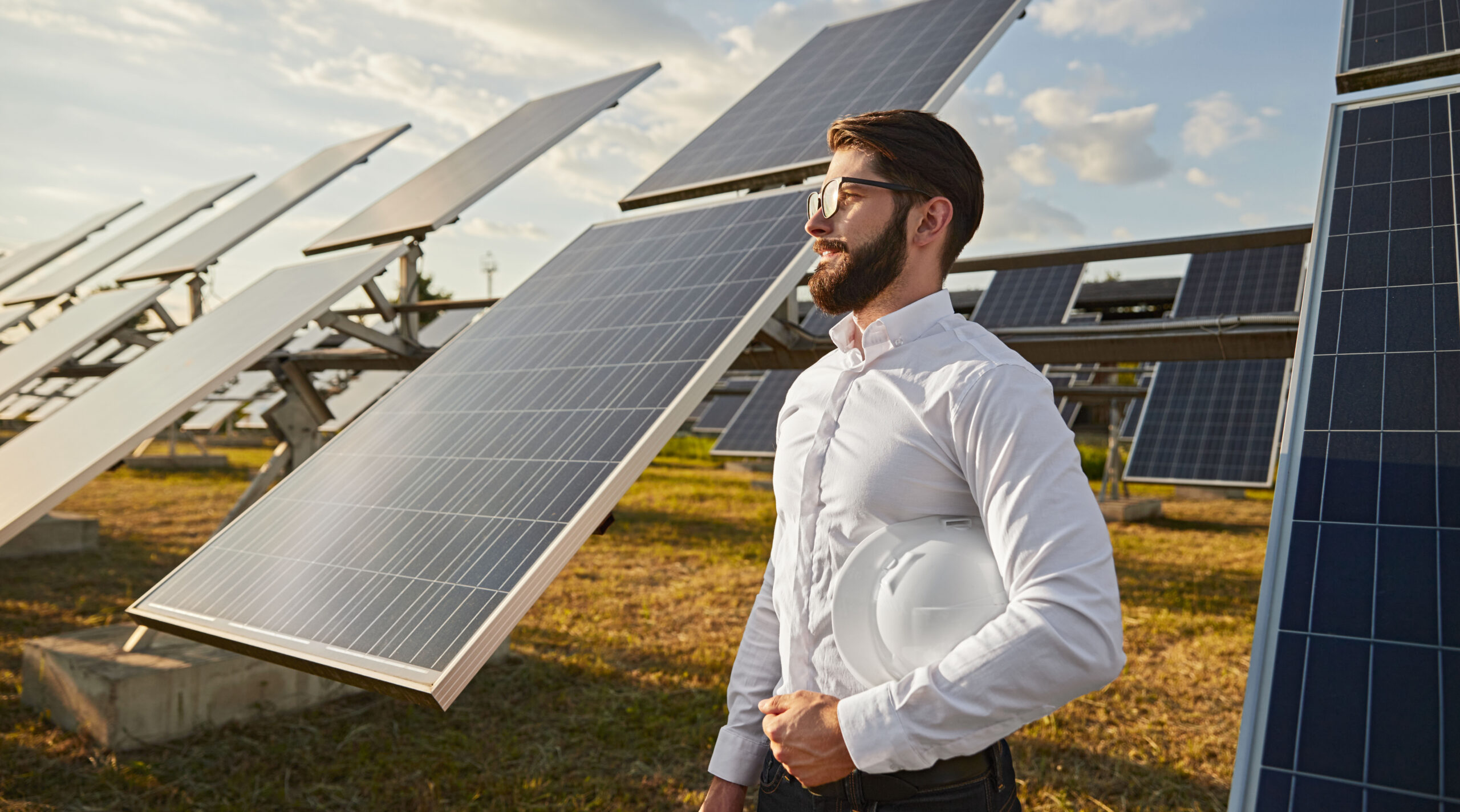
Solar Energy for South African Businesses in 2026: What You Need to Know Before Making the Switch
Every month, South African businesses absorb yet another Eskom tariff increase, costs that eat directly into margins and make long-term financial planning a challenge.
In 2026, solar energy has moved beyond a sustainability statement.
For businesses of all sizes, it is fast becoming one of the most reliable tools for reducing operating costs, stabilising cash flow, and protecting against load-shedding.
This guide is written specifically for South African business owners. The financial dynamics, system requirements, incentives, and risks differ significantly when you are running commercial premises.
Whether you manage a manufacturing facility in Gauteng, a retail outlet in Cape Town, or a distribution warehouse in Durban, this guide will equip you to make a confident, well-informed decision.
Why 2026 Is a Pivotal Year for Commercial Solar in South Africa
Several converging factors make 2026 particularly significant. Eskom’s Multi-Year Price Determination continues to push commercial electricity rates upward. At the same time, the cost of solar photovoltaic panels and battery storage has fallen dramatically over the past five years, as tracked by the International Renewable Energy Agency.
The result is a narrowing gap between what you pay the grid and what it costs to generate your own power, and in many cases, that gap has already closed.
Additionally, South Africa’s Section 12B tax incentive, which allows businesses to deduct the cost of qualifying renewable energy assets, remains one of the most compelling business case drivers for commercial solar investment in the country.
Unlike residential installations, businesses can access accelerated depreciation allowances that materially improve the return on investment.

The Three Core Components of a Commercial Solar System
A commercial solar installation is, in essence, a power plant built on or adjacent to your business premises.
Understanding its three core components will help you evaluate proposals from installers with greater confidence.
1. Solar Panels (PV Modules)
Solar panels capture sunlight and convert it into direct current (DC) electricity using photovoltaic technology.
For commercial applications, monocrystalline panels are the current standard, offering higher efficiency in a smaller footprint, an important consideration if roof space is limited.
Commercial systems are typically sized in the tens to hundreds of kilowatts (kW), compared to the 3–10 kW systems common in residential installations.
2. Inverters
The inverter converts DC power from your panels into the alternating current (AC) your equipment uses.
For larger commercial systems, string inverters or central inverters are common. However, many installers now recommend hybrid inverters, which can manage both solar generation and battery storage from a single unit, simplifying monitoring and maintenance.
3. Battery Storage
For South African businesses, battery storage is not optional, it is essential.
Load-shedding at Stage 4 or above can mean four to eight hours without grid power per day. A properly sized battery bank keeps your operations running during outages, which alone can justify a significant portion of the system cost.
The International Energy Agency’s guidance on battery storage reinforces the commercial case for integrating storage as grid reliability declines globally.
What Does a Commercial Solar System Actually Cost in 2026?
Commercial solar pricing varies considerably depending on system size, roof structure, grid connection requirements, and battery capacity. As a general guide for South African businesses in 2026:
- Small commercial system (20–50 kW): R400,000 – R900,000
- Medium commercial system (50–150 kW): R900,000 – R2,500,000
- Large commercial system (150 kW+): R2,500,000 and above, depending on scale and battery requirements
These figures include panels, inverters, mounting structures, cabling, and a battery bank sized for 4–8 hours of backup.
They do not include any civil work that may be required for ground-mounted systems or structural reinforcement of older roofs.
The Payback Period Calculation for Businesses
The payback period is the number of years it takes for energy savings to recoup your upfront investment.
For commercial installations in South Africa, this typically ranges from four to seven years, depending on:
- Your current electricity tariff and consumption profile
- The percentage of solar-generated energy consumed directly during operating hours (your ‘self-consumption rate’)
- Whether you have a wheeling agreement or net metering arrangement with your municipality
- The value of load-shedding protection to your specific business operations
A business spending R150,000 per month on electricity that reduces that bill by R120,000 per month through solar would recover a R3,800,000 system investment in approximately two and a half years, and then enjoy substantially reduced costs for the remaining 15–20 years of the system’s life.
The Section 12B Tax Incentive: A Critical Factor for SA Businesses
Unlike residential customers, South African businesses can claim significant tax relief on commercial solar investments under Section 12B of the Income Tax Act.
This provision allows for accelerated depreciation on qualifying renewable energy assets.
As of 2026, businesses may be able to deduct a substantial portion of qualifying solar assets in the year of installation.
Given the material impact on cash flow and effective payback period, we strongly recommend consulting a qualified tax adviser before committing to an installation. Your solar installer should not be your primary source of tax advice.
Net Metering and Wheeling: Selling Power in 2026
Net metering, the ability to sell surplus solar-generated electricity back to the grid in exchange for credits, has been an important part of the solar value proposition.
However, as the International Energy Agency notes, utilities are increasingly moving away from one-for-one retail rate credits towards lower wholesale export rates.
This trend is well underway in South Africa’s major metros.
For businesses, this means the strategic priority has shifted. Rather than designing a system to maximise export, the goal is to maximise self-consumption, using as much of your own solar power as possible during your operating hours, and to store the remainder in batteries for use when the sun is not shining.
A growing alternative for larger businesses is wheeling. the ability to move privately generated electricity across the grid to another premises you own.
The National Energy Regulator of South Africa (NERSA) has made progress on the regulatory framework for wheeling, and it is worth exploring with a specialist adviser if your business operates across multiple sites.
Is Your Business Premises a Good Candidate for Solar?
Before requesting quotes, run through this checklist, adapted from guidance provided by the Energy Saving Trust and tailored for commercial premises:
Roof or Land Availability
Commercial solar works best on flat or low-pitched roofs with minimal shading from parapets, air conditioning units, or neighbouring buildings.
Ground-mounted arrays are an option if you have available land, particularly for agricultural or industrial businesses. A professional site survey will assess shading, structural load capacity, and optimal panel orientation.
Daytime Energy Consumption
Solar is most valuable to businesses that consume significant electricity during daylight hours, typically 08:00 to 17:00.
Manufacturing operations, cold storage facilities, large retail premises, offices, and hospitality venues are strong candidates. Businesses that are largely inactive during the day will see reduced self-consumption rates and a longer payback period unless battery storage compensates.
Monthly Electricity Spend
As a practical threshold, businesses spending R30,000 or more per month on electricity are well-positioned to see a compelling return on a commercial solar investment.
Below this level, the payback period may extend beyond what is financially attractive, though battery backup alone may justify the investment if load-shedding losses are significant.
Roof Condition and Lease Terms
If your business occupies leased premises, you will need landlord consent and clarity on what happens to the system if you vacate.
Additionally, a roof that is approaching the end of its lifespan should be replaced before panels are installed, retrofitting later is considerably more expensive.
Financing Options for Commercial Solar
How you finance a commercial solar installation has a direct bearing on your return on investment, cash flow, and balance sheet.
The main options available to South African businesses in 2026 are:
Outright Purchase
Purchasing with business capital or reserves delivers the strongest long-term financial return.
You own the asset outright, claim the full Section 12B depreciation allowance, and begin receiving the full benefit of energy savings immediately.
For businesses with available capital, this remains the most financially efficient route.
Business Solar Loan or Asset Finance
A number of South African banks and specialist lenders offer asset finance for commercial solar installations.
Monthly loan repayments can often be structured to be lower than your current monthly electricity spend, creating immediate positive cash flow. The Industrial Development Corporation (IDC) and several commercial banks have dedicated green finance facilities worth exploring.
Power Purchase Agreement (PPA)
Under a PPA, a third-party investor owns and installs the solar system on your premises. Y
ou purchase the electricity it generates at a rate lower than the Eskom tariff, with no upfront capital outlay. The trade-off is that you do not own the asset, cannot claim the tax incentive, and are bound by a long-term contract, typically 10–20 years.
PPAs suit businesses that cannot access capital finance but want immediate bill savings.
Solar Lease
Similar to a PPA, a lease involves renting the solar equipment for a flat monthly fee.
As with a PPA, the installer retains ownership of the system and the associated tax benefits. Leases can complicate property sales or lease renewals and should be reviewed carefully by your legal adviser before signing.
How to Choose a Reputable Commercial Solar Installer
The quality of your installer determines not just the performance of your system on day one, but its reliability, warranty coverage, and servicing over the next two decades.
Here is what to look for:
Accreditation and Credentials
In South Africa, installers should hold accreditation with the South African Photovoltaic Industry Association (SAPVIA) and registration with the South African Qualification and Certification Committee for Electricity (SAQCC).
For larger systems connected to the grid, your installer must also comply with Eskom’s Small-Scale Embedded Generation (SSEG) standards and relevant municipal connection requirements.
Commercial Track Record
Always ask for references from comparable commercial installations.
A company that primarily installs residential systems may not have the experience required for a complex commercial project. Ask to visit a completed installation of similar scale to your own.
Three Questions to Ask Every Installer
- Is this proposal based on a full on-site survey and energy audit, or a satellite estimate?
- Who will handle warranty claims and maintenance – your team or a subcontractor?
- What is your process for managing grid connection applications with the municipality or Eskom and is this a requirement for you?
Get a minimum of three independent quotes. This is not merely about price comparison, it exposes you to different approaches, equipment choices, and service models, enabling a far more informed decision.
Your 2026 Action Plan: Four Steps to Going Solar
- Audit your energy use. Gather your last 12 months of electricity bills. Identify your average monthly kWh consumption and your peak demand (kVA). This data forms the basis of every credible installer proposal.
- Assess your premises. Evaluate your roof or land availability, check your lease terms, and commission a structural survey if your roof is older or of uncertain load capacity.
- Request three or more quotes. Use the questions in this guide. Verify accreditations. Ask for detailed performance projections, not just a headline figure.
- Model the financials properly. Factor in Section 12B relief, your chosen financing structure, projected Eskom tariff increases, and, critically, the cost to your business of load-shedding. The numbers should be stress-tested, not optimistic.
Final Thoughts: Solar as a Business Strategy, Not Just a Cost Saving
In 2026, going solar is no longer simply an environmental choice or a novelty for progressive businesses. It is a strategic decision with measurable financial consequences, both for businesses that act and for those that delay.
South Africa’s electricity landscape, characterised by persistent load-shedding, rising tariffs, and an improving regulatory environment for embedded generation, has created conditions in which a well-designed commercial solar system can genuinely transform your cost base for the next two decades.
The businesses that will benefit most are those that approach this decision with the same rigour they would apply to any other major capital investment: thorough analysis, expert advice, and careful selection of partners. The resources and frameworks in this guide are your starting point.

Frequently Asked Questions about Solar Energy
- Cost reduction
- Energy independence
- Eco-friendly
- Incentive opportunities
- Property value
The answer, though, is simple: Large appliances. If you're running a central air conditioner (which uses about 2,000 kilowatt hours of electricity per year), heat pump, or clothes washer or dryer frequently, you could be consuming much more energy than you regularly do.
Yes, solar panels work on cloudy days, but they are significantly less efficient and produce about 10–25% of their normal power output. Sunlight still reaches the panels as a diffuse light source, and modern panels can still generate electricity, though much less than on a clear, sunny day. The exact amount of power generated depends on the cloud cover's thickness.
The size of the solar system you need depends on your energy consumption, the size of your roof, and the amount of sunlight your home receives. Get in touch today and let us help you determine the appropriate size for your needs.
While it is possible to install a solar system yourself, it is highly recommended to hire a professional solar installer (like us) to ensure that the system is installed safely and correctly.
WHO WE ARE AT SOLAR PROJECTS
Solar Projects part of the EEC family, offering a full range of solar energy services, from designing and installing your system to keeping it running smoothly with ongoing maintenance.
We help our clients with:
- Solar Financial Solutions
- Residential Solar Projects
- Commercial Solar Projects
- Solar Rent To Own Financing
